Learn to Read Music: The Best Resources for Beginners
If you’re learning music for the first time or dusting off a new instrument you’ve always wanted to try, reading sheet music can feel like learning an entirely new language. Between note names, rhythms, and those mysterious symbols scattered across the staff, it’s a lot to take in.
The good news? With the right mix of tools, you can go from “what does this squiggle mean?” to confidently playing real music much faster than you might think.
Below are 10 resources we recommend here at Notebusters. Yes, we’re a little biased (spoiler: Notebusters makes the list), but we’ve also included other books, games, videos, and websites that we’ve seen work wonders for beginners and returning players alike. The list is split into two categories:
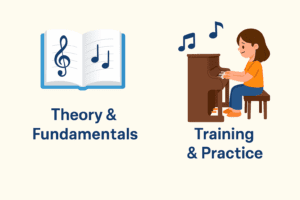
Theory and fundamentals so you understand what you’re looking at.
Training and practice so your brain and fingers work together in real time.
Top 5 Music Theory and Fundamentals Resources
1. Alfred’s Essentials of Music Theory
A classic for a reason. Alfred’s series starts with absolute basics like note names and time signatures, then gradually introduces scales, chords, and harmony. The lessons are short, approachable, and designed to build on each other. There’s even an interactive version for those who prefer learning on a screen.
2. Piano Adventures Theory Book
If you’re learning piano specifically, this series integrates theory directly into pieces you’ll actually play. Instead of abstract drills, you learn note values, rhythms, and intervals as part of real music. It’s perfect for younger learners or anyone who wants theory to feel connected to their instrument.
3. Essential Elements Piano Theory Book
Widely used in school programs, this method connects theory to practical playing exercises. Each concept is introduced with a quick explanation and then reinforced through short musical examples.
4. Music Theory for Dummies
Don’t be fooled by the name — this book is thorough. It covers everything from reading rhythms to understanding chord progressions, but explains it in plain English. A solid pick for adults or self-taught musicians.
5. MusicTheory.net (Free)
This free website is a treasure for visual learners. You’ll find bite-sized lessons, customizable exercises, and tools like an interval trainer. It’s especially useful if you want to review concepts at your own pace between practice sessions.
Top 5 Training and Practice Resources
1. Notebusters Music Workbooks
Our best-selling workbooks turn note reading into a timed challenge. Each drill is printed like standard sheet music, so you can play it directly on your instrument: piano, guitar, violin, or anything else you’re learning. The format keeps students engaged while building speed, accuracy, and confidence.
2. Note Dash (Free)
A quick, browser-based game where you race against the clock to identify as many notes as possible. It works on desktop, tablet, and mobile, so you can squeeze in practice anywhere. Great for kids (and adults) who think flashcards are boring.
3. Piano Finger Exercises for Beginners – YouTube Series by Josh Wright (Free)
Proper finger positioning makes reading music easier because you don’t waste time figuring out “how” to play what you see. This video series is approachable and practical, with short exercises you can work into daily practice.
4. Essential Elements Interactive
An online learning platform that pairs with the Essential Elements method books, offering video tutorials, play-along tracks, and practice tools.
5. 8notes.com (Free & Paid)
Real songs are the best practice material, and 8notes has thousands. You can filter by instrument, difficulty, and style. Perfect for bridging the gap between drills and real-world playing.
How to Bring it all Together for Faster Music Playing
If your goal is to learn to read music quickly and confidently, start with at least one resource from each list. Theory will give you the “why,” and training will give you the speed. If you’re a parent with a young learner, summer is a perfect time to build these skills – especially with fun, short daily practice.
Whether you’re learning for school band, personal enjoyment, or to level up your piano skills, these tools can help you make real progress. And if you want a mix of on-paper drills and on-the-go fun, pairing a Notebusters workbook with Note Dash is a proven way to get results.

Big fan of Alfred’s – used with our older son. Younger just starting piano. HATES flash cards. Will try a mix of Alfreds and Notebuster. What do you recommend between beginner piano & complete?
We LOVED the Essential Elements book. Wish we had known about Notebusters when our child was starting piano. Just got the Complete Edition – he is loving it and definitely more confident playing now. Thanks!
Been using Notebusters for a couple years now with both our kids. Love them. Definitely keeping their piano teacher happy! The new app is fun in the car!